What is a Quotex Demo Account?
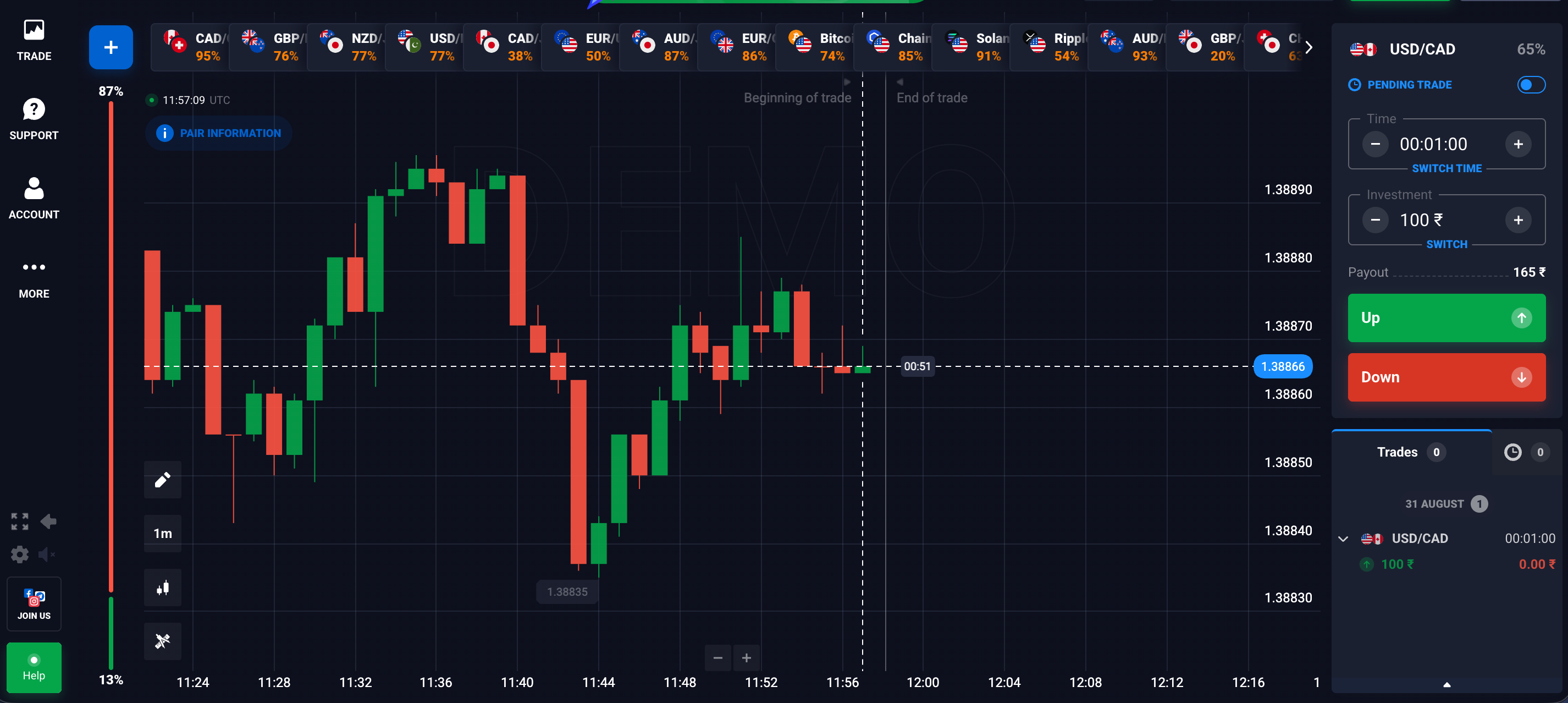
A Quotex demo account is a simulated trading environment designed to help beginner traders learn how financial markets operate without risking real money. It mirrors the exact interface, chart movements, and execution tools of a live trading account, but uses virtual funds instead of actual cash.
For individuals stepping into trading for the first time, a demo account acts as a risk-free sandbox. It allows users to familiarize themselves with platform mechanics, analyze price action, test technical tools, and build basic trading habits before deciding whether to deploy real capital.
Is the Quotex Demo Account Completely Free?
Yes, opening and using a demo account on Quotex is entirely free. Users are not charged any subscription fees, maintenance costs, or platform usage charges to access virtual trading. Furthermore, creating a demo account does not obligate you to make a deposit or switch to a live account at any point.
Is Demo Account Market Data the Same as the Live Account?
In terms of price movements and technical charts, the demo account uses the same real-time market data feed as a live account. The asset quotes, candlestick patterns, historical data, and technical indicators behave identically in both environments.
However, while market data is identical, the trading experience differs in one critical aspect: psychology. Demo trading involves zero financial risk, which means fear and greed do not influence your decisions the way they do when real money is on the line.
Step-by-Step Guide to Setting Up a Demo Account
Setting up your virtual workspace is quick and straightforward. Follow these standard steps to get started:
- Visit the Platform: Navigate to the official website or launch the mobile application.
- Select Registration: Click on the sign-up button located on the home screen.
- Enter Basic Account Details: Provide a valid email address and create a secure password. Select your preferred base account currency.
- Choose the Demo Option: Upon completing registration, choose the option to start trading on the demo account.
- Access the Workspace: You will immediately enter the trading terminal pre-loaded with virtual practice funds.
Do You Need to Deposit Real Money to Open a Quotex Demo Account?
No, you do not need to deposit any real money to open or use a demo account. The platform does not require credit card details, bank information, or payment authorization during the demo setup process. You can start practicing technical analysis immediately after completing the basic sign-up.
Key Features of the Quotex Trading Interface
The practice terminal comes equipped with several analytical and functional tools designed to give beginners hands-on experience with charting software:
- Interactive Price Charts: Switch between different chart styles, including Japanese candlesticks, area charts, line charts, and bar charts.
- Multiple Timeframes: Analyze market movements across various time intervals, ranging from 5-second charts for quick analysis to hourly or daily views for broader context.
- Technical Indicators: Access popular technical analysis tools such as Moving Averages, the Relative Strength Index (RSI), Bollinger Bands, and MACD to identify potential trend direction.
- Drawing Tools: Use visual tools like trendlines, support and resistance lines, and Fibonacci retracements to map key price levels directly on the chart.
- Asset Selection Menu: Practice analyzing a variety of assets, including major foreign exchange pairs, commodities, market indices, and digital currencies.
- Execution Controls: Familiarize yourself with setting trade durations and selecting trade directions (higher or lower) based on your analysis.
How to Practice Risk-Free Trading Strategies
Using a practice account effectively requires structure. Simply clicking buttons without a clear approach will not help you grow as a trader. Here is how to construct a disciplined practice routine:
1. Treat Virtual Capital Like Real Money
Avoid opening trade sizes that exceed what you would realistically use on a live account. If you plan to start real trading with a small amount, adjust your virtual trade sizes to reflect that reality.
2. Focus on One or Two Assets
Rather than jumping between dozens of markets, select one or two currency pairs or assets. Study how they move during specific market sessions to build familiarity.
3. Keep a Trading Journal
Document every practice trade you take. Record the reason for entry, the technical indicators used, the timeframe, and the outcome. Reviewing your history helps identify strategic flaws and areas for improvement.
4. Test Basic Risk Management Rules
Practice risking only a small percentage of your virtual account balance on any single trade (such as 1% to 2%). This reinforces capital preservation habits essential for real-world trading.
Can I Refill My Quotex Demo Balance If I Lose Virtual Funds?
Yes. If your virtual balance drops low after testing high-risk ideas or experiencing consecutive losing trades, you can reset or top up your demo funds back to the starting amount at any time. Look for the refresh or refill button near your account balance display within the platform menu.
Common Mistakes Beginners Make on Demo Accounts
While demo trading carries no financial risk, it can create poor habits if approached incorrectly. Watch out for these common beginner traps:
- Over-Trading: Opening dozens of positions per hour simply because there is no penalty for losing. This leads to impulsive decision-making.
- Ignoring Risk Rules: Placing maximum-sized trades to chase quick virtual gains. This creates an unrealistic expectation of how real financial markets operate.
- Strategy Hopping: Changing your approach after just one or two losing trades. Consistent strategy evaluation requires a larger sample size of practice trades.
- Developing False Confidence: Mistaking a winning streak on a demo account for total market mastery. Winning in a zero-stress environment is significantly different from managing real financial exposure.
When to Switch from Demo to Live Account
Transitioning from a simulated environment to a real trading account is a personal decision that should depend on skill, discipline, and preparation rather than speed. Consider moving to a live account only when you meet the following practical benchmarks:
Consistent Rule Adherence: You can follow your defined trading rules for several consecutive weeks without breaking your strategy out of boredom or frustration.
Platform Proficiency: You fully understand how to set order parameters, navigate timeframes, and apply chart tools quickly and without operational mistakes.
Clear Understanding of Risk: You acknowledge that financial markets carry inherent risk, losses are a normal part of trading, and outcomes on a live account carry psychological weight that demo trading cannot replicate.
When you do decide to transition, consider starting with the smallest allowable live trade size. This allows you to measure how real financial stress impacts your execution before taking on larger market positions.

Comments
No comments yet.
Leave a comment
Comments are moderated and will appear after approval.